

I. SUPPLY – DEMAND
1. Supply
AgroMonitor data shows that Vietnam exported approximately 3.385 million tons of rice from the Winter–Spring crop as of May 2026. Although market demand has experienced notable fluctuations, export volumes have remained broadly in line with the level recorded during the same period last year.
In end of May 2026, according to data from the Ministry of Industry and Trade and the Ministry of Agriculture and Environment shows that Vietnam exported 1.1 million tons of rice, generating USD 512 million in export revenue. During the first five months of the year, cumulative exports reached 4.5 million tons, up 6.6% year-on-year, while export value fell 3.6% to USD 2.1 billion.
On the supply side, Vietnam's Summer–Autumn crop is forecast to produce 2.96 million tons of rice from 1.382 million hectares of planted area. Although higher production and logistics costs may slow planting decisions, output is expected to remain broadly stable compared with last year, declining by only 1.2%.
2. Demand
After scaling back imports of Vietnamese fragrant rice in previous periods, the Philippines re-entered the market in early 2026. Supported by strong domestic demand, the country's rice imports are projected to reach approximately 5.5 million tons this year.
As of June 2026, Vietnam's rice exports to the Philippines reached over 2.1 MMT, compared with 1.894 MMT in the same period of 2025, highlighting the market's sustained import demand.
In addition to the Philippines, China is expected to remain one of the major drivers of global rice import demand, with imports projected to hold steady at approximately 3.2 million tons in 2026.
At the same time, ongoing geopolitical uncertainties in the Middle East are driving shifts in regional trade patterns. Iraq has increasingly emerged as a strategic alternative market, with rice imports expected to expand significantly and reach around 2.15 million tons this year.
II. RISK FACTORS
1. Global Climate Risk: El Niño Returns in 2026
International meteorological agencies forecast that El Niño is likely to return from June 2026 with a probability exceeding 90% and may persist into early 2027. Many experts warn that it could develop into a “Super El Niño,” potentially ranking among the strongest events in the past 150 years and comparable in intensity to the 2015–2016 episode.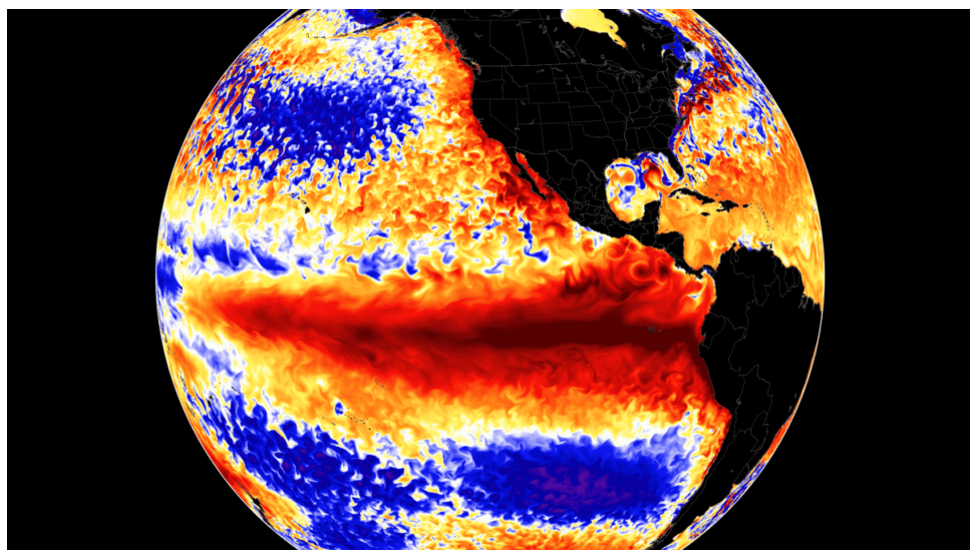
Rising Equatorial Pacific Ocean Temperatures Point to the Formation of El Niño
The return of El Niño is expected to pose substantial risks to South Asia, Southeast Asia, and Australia, with extreme temperatures, widespread drought, and heightened wildfire threats anticipated across the region, particularly in Indonesia and Malaysia.
Beyond weather-related disruptions, the phenomenon is expected to affect several key economic sectors. Agricultural production may be constrained by water shortages, while fisheries could experience lower yields due to warmer ocean conditions and fish migration. Meanwhile, reduced hydropower output and rising electricity consumption are likely to increase pressure on the energy sector.
2. Impact on Global Rice Supply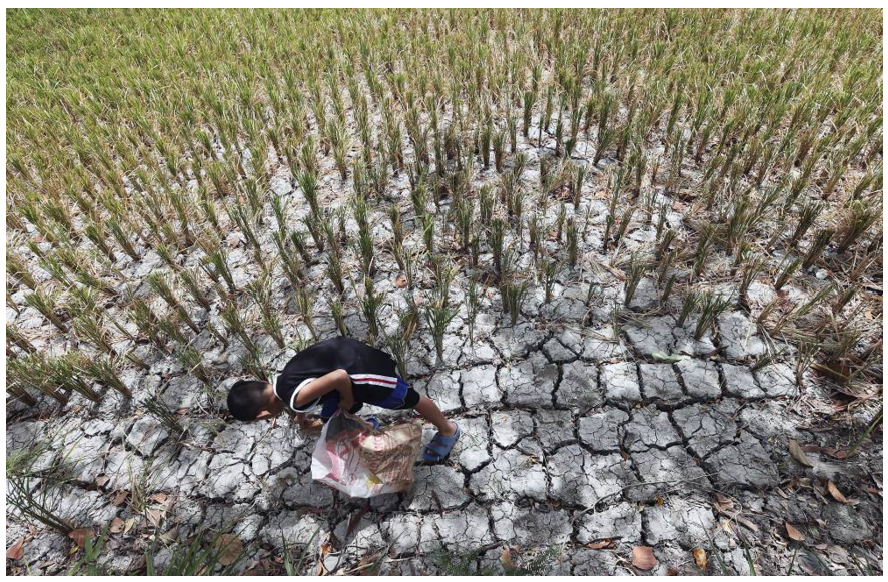
Asian Rice Production Expected to Be Significantly Affected by El Niño
El Niño is expected to increase pressure on global rice supplies as key producing regions face mounting water scarcity challenges. Rice output in the Philippines could fall by up to 50% under prolonged adverse weather conditions, while critically low reservoir levels in Malaysia are already delaying planting operations.
Combined with elevated production costs, these supply risks are likely to support higher food prices and contribute to growing concerns over global food inflation in the coming months.
III. MARKET OUTLOOK
Stocks from Vietnam's Winter–Spring crop remain tight, particularly for white rice varieties such as OM5451, OM18, and DT8, following a surge in demand from the Philippines since early 2026 along with slower paddy imports from Cambodia.
Despite the current tightness, supply prospects remain favorable. Production from the upcoming Summer–Autumn crop is expected to remain stable, supporting adequate rice availability in the months ahead.
Moreover, weather forecasts indicate that Vietnam may be less exposed to the adverse effects of El Niño than several other rice-producing countries in the region, helping to sustain both domestic supply and export capacity.
The Philippines continues to be a key factor supporting rice prices in 2026. Market activity is expected to pick up ahead of the Summer–Autumn harvest beginning in August, providing additional momentum for further price increases in the coming months.
