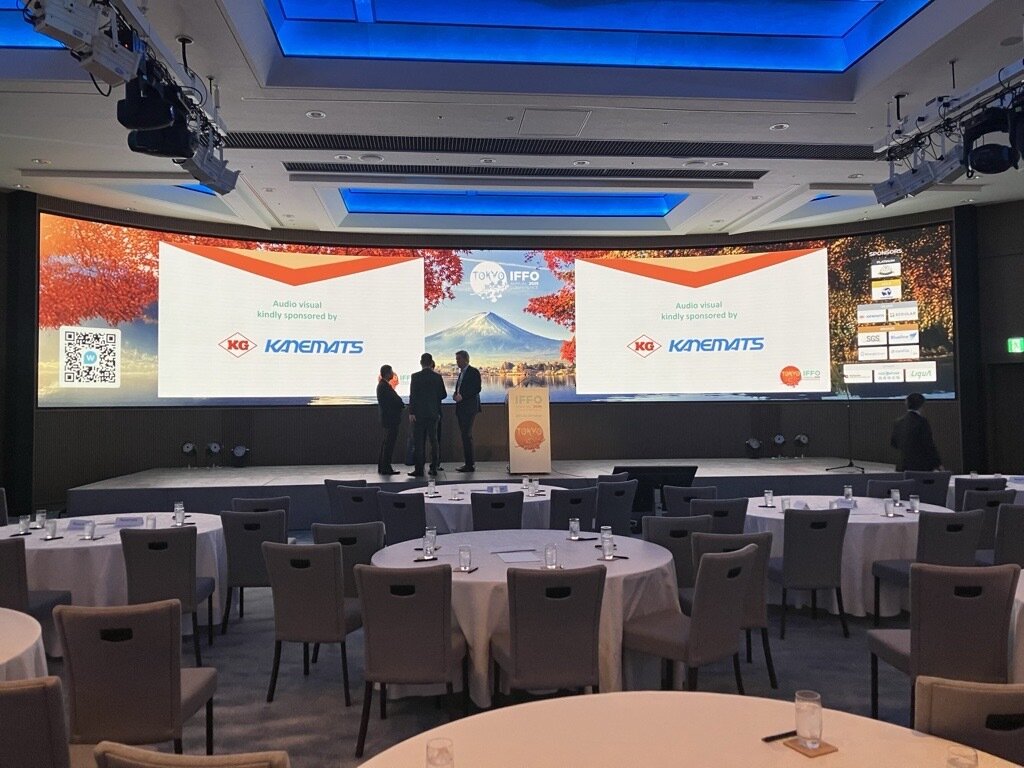
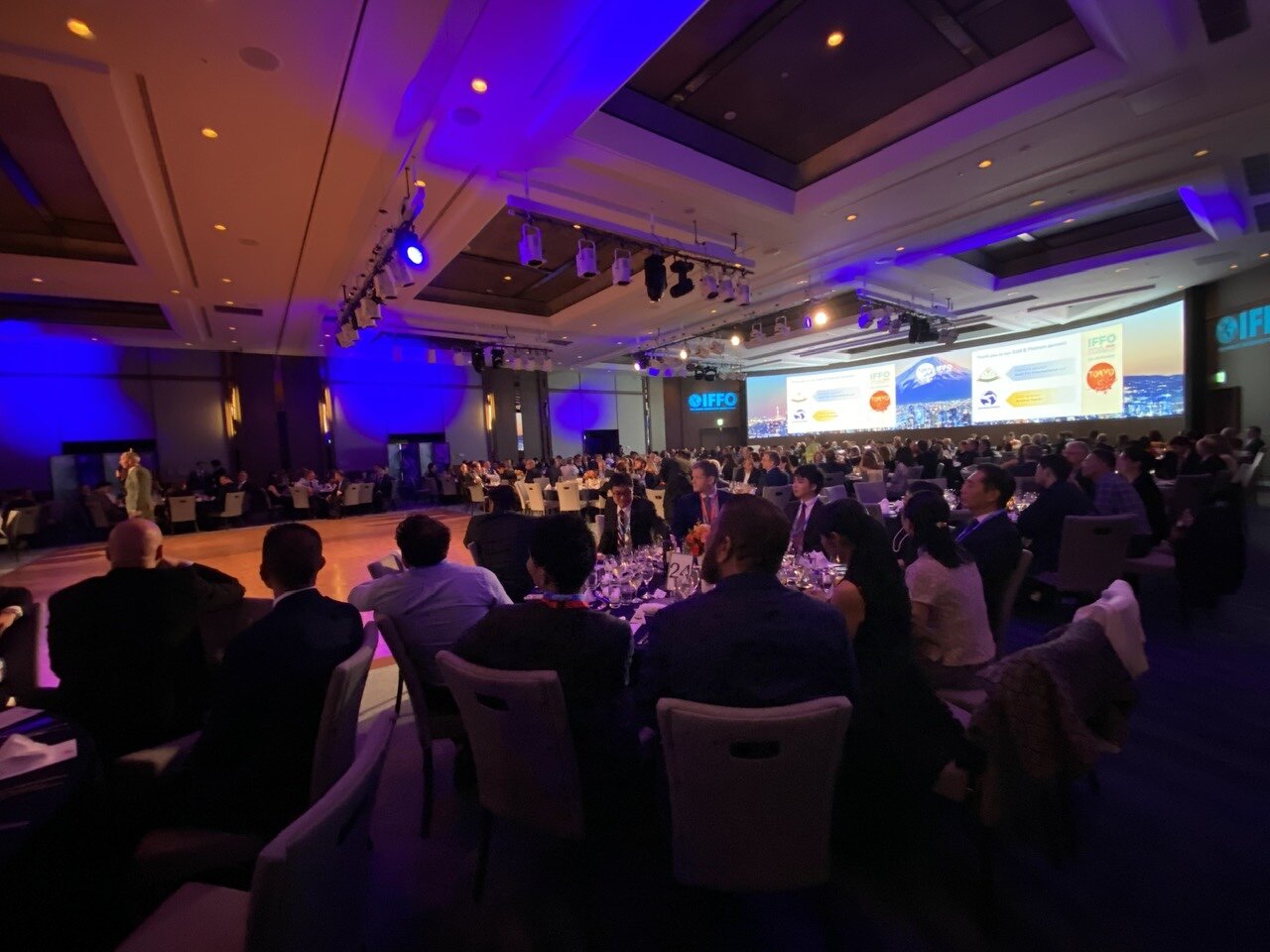
IFFO Conference 2025 (20-22 October | Tokyo, Japan)
As the organizer of IFFO Conference 2025, Kanematsu Corporation was proud to host this important industry dialogue in Tokyo. Ms. Ngo Nha Truc, Deputy Manager of the Feed Ingredients Department, representing Kanematsu Vietnam, also participated in the event and actively engaged in discussions and exchanges with partners from around the world, contributing to the promotion of trade in fish-based ingredients, agricultural products, and related commodities from Vietnam to global markets and vice versa.
A key highlight of the feed ingredients session was the presentation on Japanese market trends by Mr. Hikaru Kondo (Protein Meal & NGFI Section, Kanematsu).
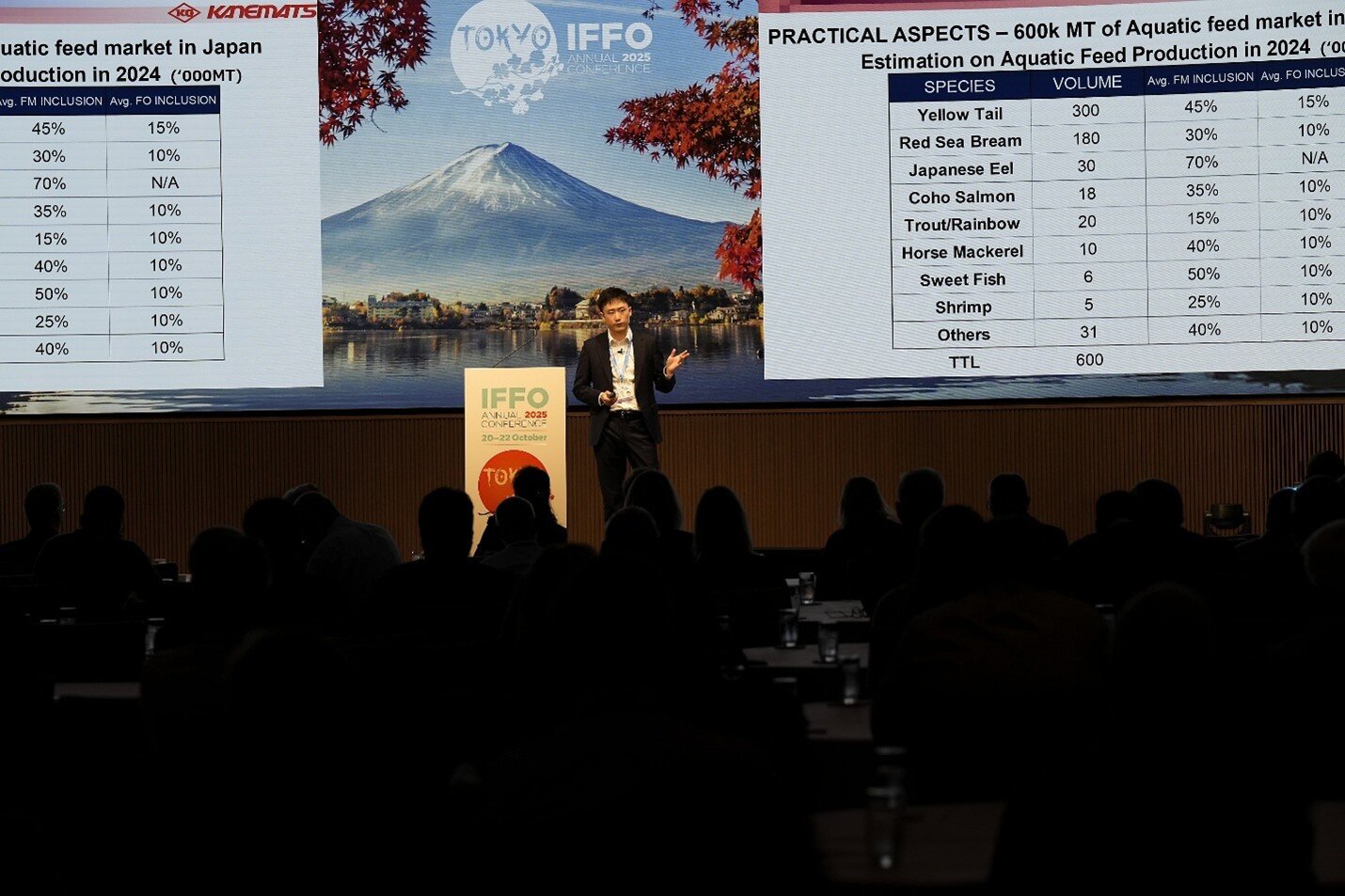
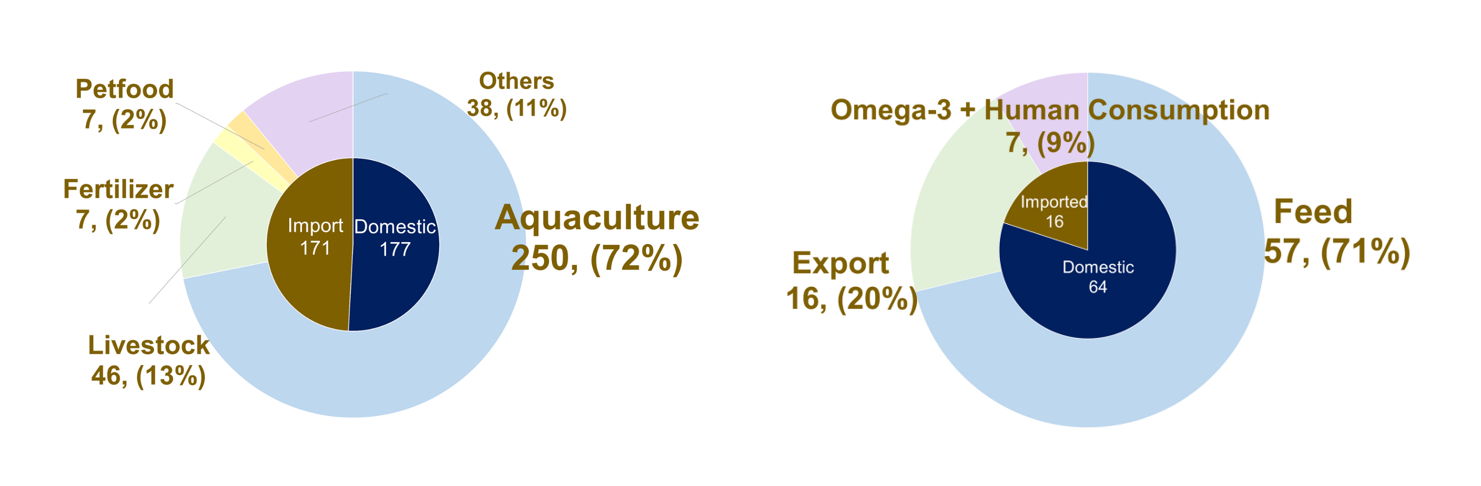
Japan’s fishmeal demand has remained stable over the past decade, averaging around 350 KMT annually, with aquaculture accounting for 72% of total consumption in 2024, followed by livestock at 13%. Demand is expected to increase gradually, driven by the expansion of aquafeed usage. Imports are mainly sourced from Peru (35%), valued for high-density quality preferred by Japanese feed formulators, while India and Oman are emerging as growing suppliers.
For fish oil, Japan maintains high domestic production, with feed representing 71% of total usage, followed by human consumption (omega-3) at 9%. Chile dominates imports (75%), particularly salmon oil that meets Japan’s certification requirements. In addition, Japanese sardine oil production is increasing, both in volume and market value.
Key farmed species in Japan include Yellowtail, Red Sea Bream, Japanese Eel, and Coho Salmon. Among these, Japanese eel has the highest fishmeal inclusion rate, while yellowtail is the largest consumer of fish oil. Overall, demand for marine ingredients is expected to continue growing, supported by the ongoing transition from live bait to formulated aquafeed.
--------------------------------
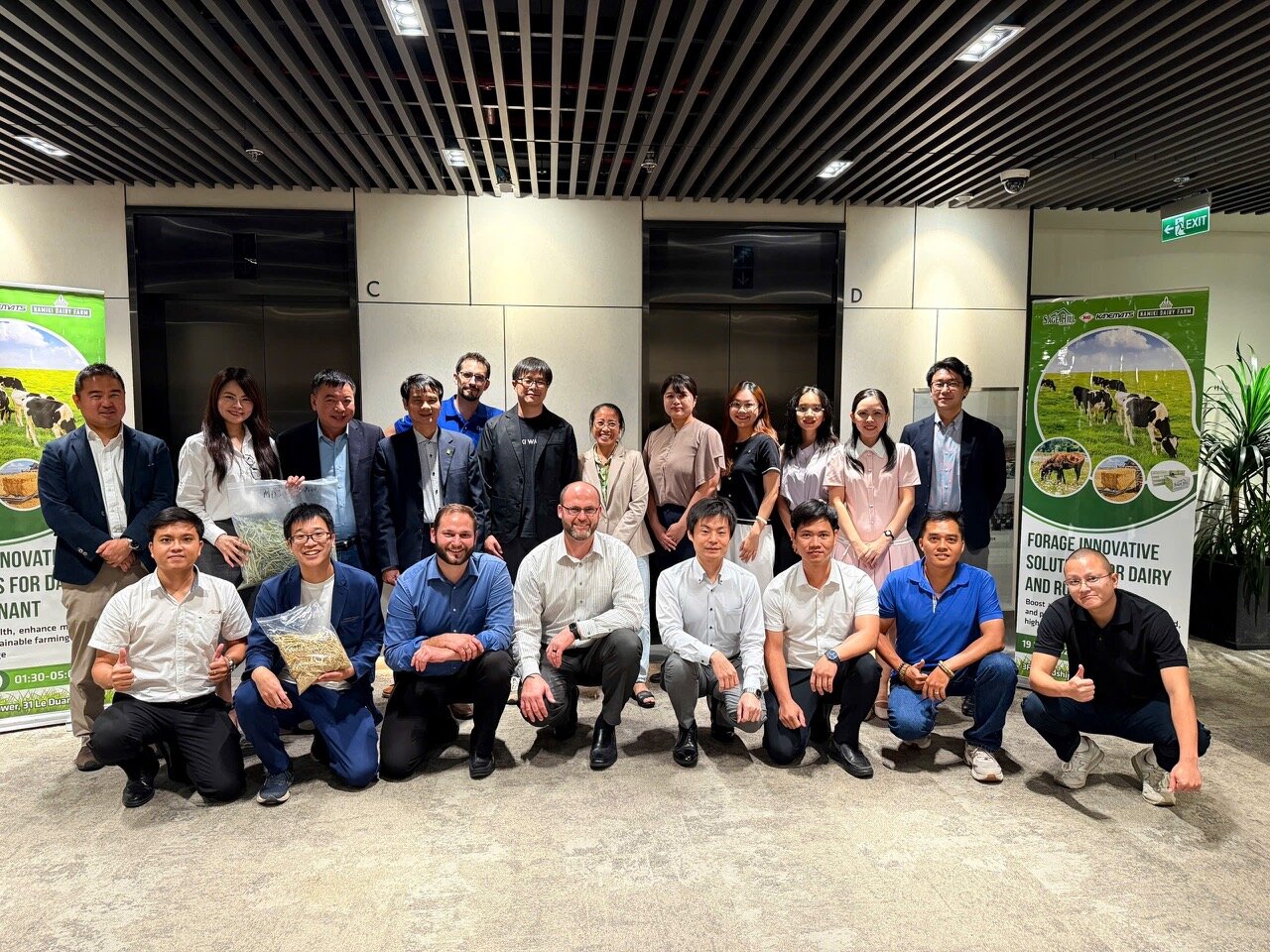
Seminar on “Forage Innovative Solutions for Dairy and Ruminant” – Advancing Forage Solutions for the Dairy and Ruminant Industry
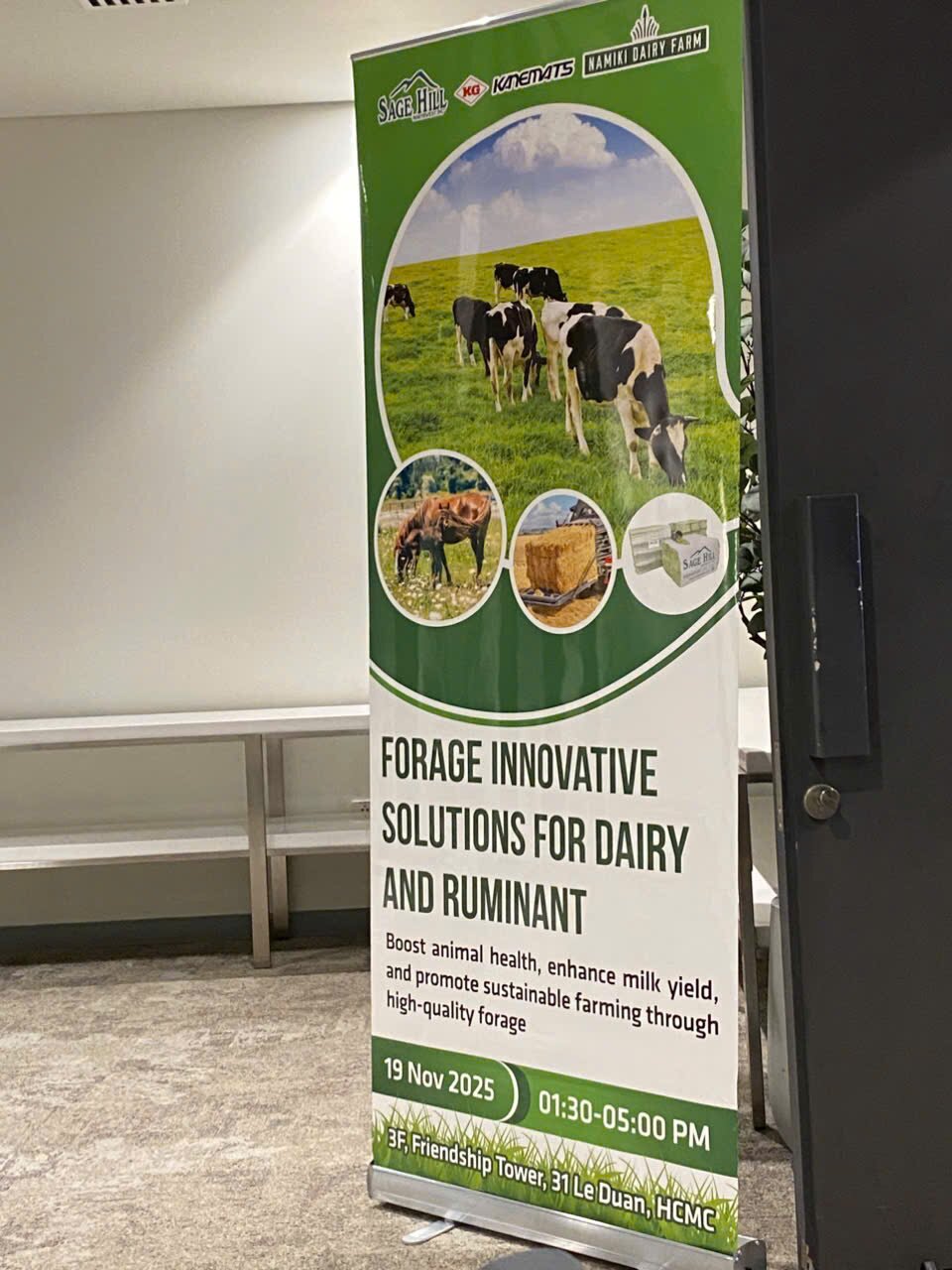
On 19th November, 2025, Company successfully organized a specialized seminar titled “Forage Innovative Solutions for Dairy and Ruminant”, bringing together international partners, nutrition experts, and representatives from local farms. The event provided a comprehensive overview of the forage market, the growing trend of imported hay, and sustainable development directions for the dairy sector in Vietnam.
Opening Remarks
The seminar began with opening remarks delivered in Vietnamese by Mr. Kotaro Suzuki, General Director of Kanematsu Vietnam Co., Ltd. Having spent many years dedicated to the feed industry in both Japan and Vietnam, Mr. Suzuki emphasized:
“This seminar is a wonderful opportunity for us to exchange ideas, learn from one another, and discuss the future of forage and animal feed.”
He added that the event also served as a platform to strengthen relationships among partners and explore new avenues for collaboration.
Technical Presentations
1. Representatives from Sage Hill Northwest (USA): Alfalfa Benefits and Seasonal Updates
Mr. Stefan and Mr. Devin from Sage Hill Northwest provided an overview of the nutritional benefits of Alfalfa, the production process, and updates on weather and harvest conditions in major producing regions such as Washington and Idaho.
2. Bodiam – Oaten Hay from Australia
Ms. Nhung (Feed Team, Kanematsu Vietnam), representing Bodiam—a leading Oaten Hay producer in Australia—shared insights into the characteristics, advantages, and effectiveness of Oaten Hay in dairy nutrition.
3. Dairy Farm Models and Forage Distribution Systems in Japan
Ms. Ngo Nha Truc, Deputy Manager of Feed Team at Kanematsu Vietnam, presented an overview of Japanese dairy farm models and the commercial distribution system for forage. Her presentation offered participants a clear view of how the Japanese market operates, inspiring ideas for developing a suitable model for Vietnam.
In-depth Nutrition Session
After the break, Assoc. Prof. Nguyen Huu Van, Hue University (HUAF) - a nutrition expert delivered an in-depth analysis comparing domestic forage with imported hay. From a technical standpoint, domestic forage is increasingly unable to meet both the quantity and quality demands as Vietnam’s dairy herd expands. Imported hay—particularly Alfalfa and Oaten Hay—was highlighted as an essential solution to address this growing gap.
Insights from Representative Farms
1. Ho Toan Dairy Farm (Vietnam)
Mr. Luong Duy Toan, General Director of Ho Toan JSC, introduced the farm’s operations, showcasing its adoption of advanced technologies, balanced ration formulation, and the effective use of imported hay. These practices have demonstrated positive results over the years.
2. Kaneko Farm (Japan)
Mr. Ami from Kaneko Farm presented the model of one of Japan’s renowned farms specializing in high-quality Wagyu and dairy cattle. Due to limited land resources, Japan imports approximately 2 million tons of hay annually to meet domestic consumption needs.
Discussion and Closing
The seminar concluded with an interactive Q&A session, where speakers and participants discussed market trends, strategies to optimize forage supply, and the potential application of international models within the Vietnamese context.